



Approach to Behaviour at Culverhill
At Culverhill, we adopt a consistent, structured, and restorative approach to behaviour that supports emotional regulation, positive relationships, and a calm learning environment. Our strategy focuses on prevention, early intervention, de-escalation, and restorative practices.
Proactive and Preventative Strategies
Clear Expectations: Staff remind pupils of school rules using simple, direct language.
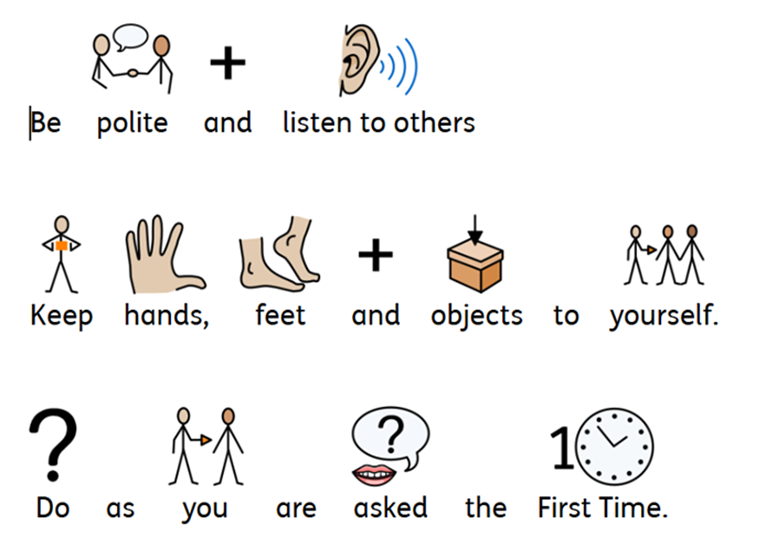
Positive Reinforcement: Staff consistently “notice” and praise positive behaviour and choices. Examples include verbal praise, CulverCoins, stickers, certificates, and home communication (e.g. SeeSaw messages, phone calls).
Rewards: Pupils earn CulverCoins for behaviour and work that go ‘above and beyond’. Pupils are encouraged to look after their own coins and make decisions regarding spending or saving. CulverCoins are used in the school shop, integrating lifeskills and incentivising positive behaviour.
Behaviour plans
Sometimes pupils need further support to follow the school rules successfully and or there is greater need for consistency of approach. The Behaviour Lead works alongside the Class Team and Family to produce a supportive Behaviour Plan that outlines specifically what behaviours we are trying to reduce or change and how we can support the pupil to do this. There maybe additional rewards and sanctions included in such plans.
School may discuss a referral to the School Educational Psychology Service to gain further advice regarding strategies and approaches.
Risk Assessments
Sometimes when a pupil is highly dysregulated or overwhelmed they may exhibit challenging behaviours that could make themselves, staff or other pupils unsafe.
The Behaviour Lead alongside with other members of the School Leadership Team, Class Team and Parents/Carers will produce a Risk Assessment that details how further unsafe situations can be prevented.
De-escalation Techniques
Calm, Controlled Responses: Staff remain emotionally regulated and avoid reacting impulsively. Emotion fuels drama – calculated, low-key responses reduce escalation.
Time and Space: Pupils are given processing or take-up time (usually 5 minutes) after reminders or warnings.
Non-verbal Approaches: Sometimes, “saying nothing” and monitoring from a distance is the most effective technique.
Respectful Language: Learners are not labelled by their behaviour. Staff use scripts to maintain clarity without shame (e.g., “Be careful about your next choice”)
Behaviour Guidelines
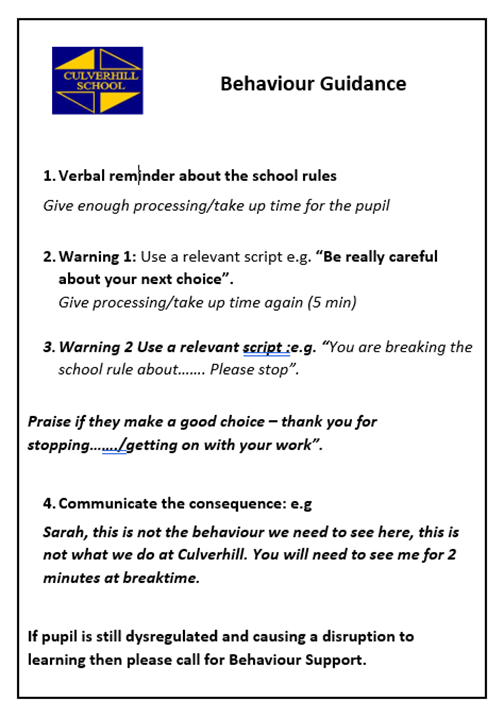
Verbal Reminder: Clarify expectations.
Warning 1: Gentle script + take-up time.
Warning 2: Clear communication of the rule being broken.
Positive Interception: Praise any turnaround in behaviour.
Consequence Delivered: Short, proportionate consequence (e.g., 2-minute reflection at break).
Behaviour Support
Behaviour Support is staffed by members of the School Leadership Team on a weekly rota basis.
Staff request support after trying multiple de-escalation strategies and when:
- Disruption affects others' learning.
- There are repeated unkind/disrespectful comments.
- There is outright refusal to engage.
- Physical behaviours such as hitting, throwing, pushing, or tripping occur.
Behaviour Support offers a quiet safe space for reflection and to de-escalate the situation.
Restorative Practice
Following incidents, pupils participate in a Restorative Conversation facilitated by SLT or staff. This promotes accountability and repair through key reflective questions:
- What happened?
- How did it make others feel?
- How can we put things right?
- How can we do things differently next time?
If you would like any further information regarding our approach to Behaviour please contact Sarah Holt – Deputy Headteacher.